
VISR
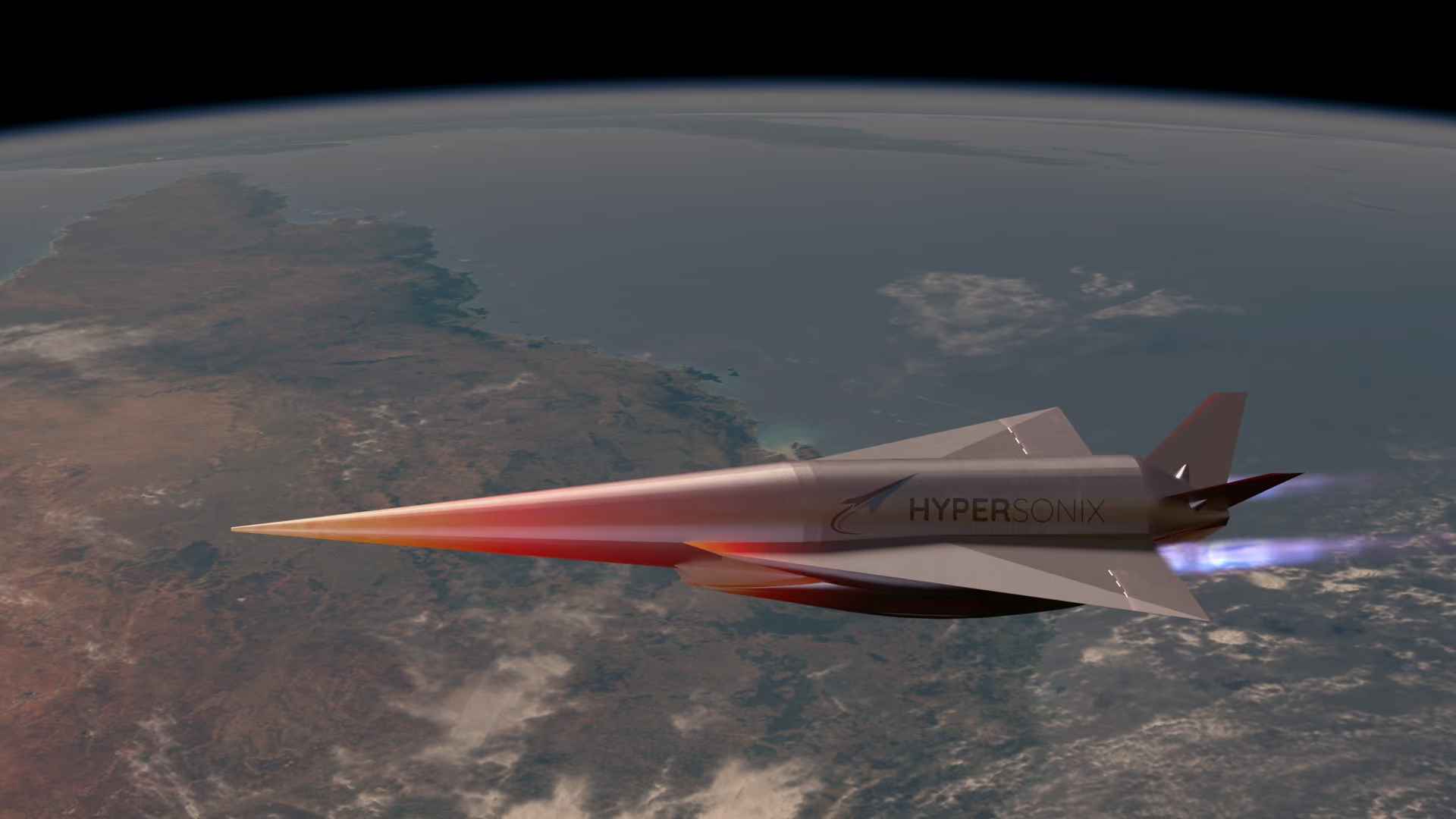
An Australian-designed and built aircraft being developed for hypersonic flight testing. Engineered as a reusable platform, this gives customers affordable, repeatable and frequent access to true hypersonic flight conditions, with applications spanning flight research, earth observation and test and evaluation.


Engineered for hypersonic flight test missions

Repeated hypersonic flight
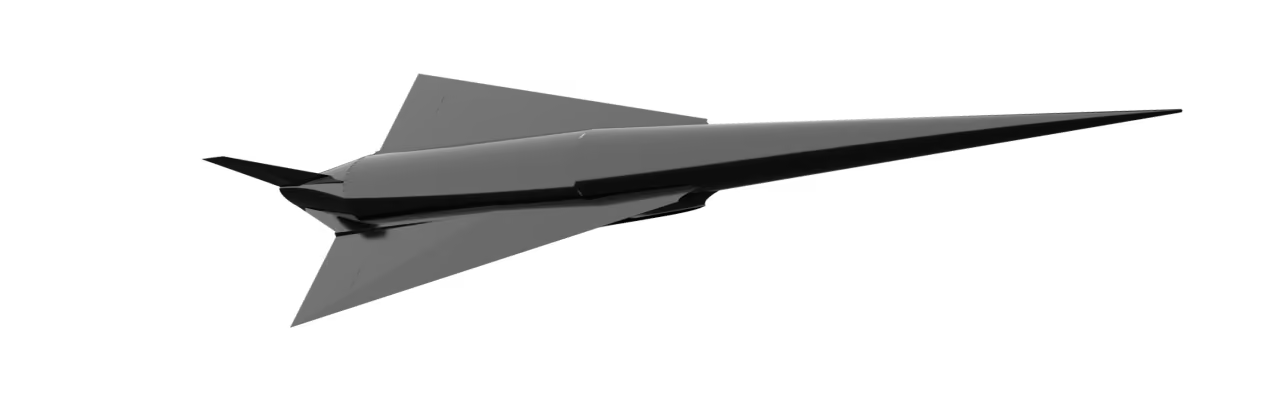
Designed for reusability and rapid turnaround, VISR will enable responsive hypersonic flight operations in addition repeatable test services.
Ceramic matrix composites
Manufactured using advanced CMC materials to unlock long-duration hypersonic flight through their high strength-to-weight ratio and high-temperature performance.
Launch from air and ground
VISR is designed for launch vehicle flexibility and the simplicity of conventional runway landings.
Manoeuvrable trajectory
VISR is designed to fly on manoeuvring and sustained trajectories that expand the flight conditions available to customers. This builds on our flight-proven performance from DART.
Specifications
Hypersonic test and evaluation
In the pursuit of technological advantage, allied nations are accelerating the development of next generation hypersonic capabilities. That advantage is proven in flight, and test opportunities remain scarce, expensive and years apart.
VISR is designed to close that gap. As a reusable, multi-mission platform that makes testing more affordable, accessible and repeatable for defence and civil customers alike.

Multi-mission payload capability
VISR will carry customer payloads into sustained flight above Mach 7, before returning them to the ground. it exposes customer payloads such as sensors, materials, communications and navigation systems to true hypersonic conditions, mission after mission.
The same performance and reusability open future applications in earth observation and time-critical payload carriage. With the longest flight time of any scramjet aircraft, VISR is set to become a significant sovereign capability for Australia.
.avif)

%20(1).avif)

Hydrogen is fuel for a low carbon future
Hydrogen can be produced from just water, using renewable energy. Burning it in an engine produces only water vapour. There is a global movement towards low-carbon fuels and Australia is set to become a key player in the hydrogen industry, with government and private investment into local green hydrogen production facilities.
Hypersonix has partnered with BOC Australia, who has announced its intention to build a green hydrogen production facility using seawater as the main ingredient, in Queensland.
The clean hydrogen industry is growing quickly Australia-wide, with over $1.6 billion invested in the private sector and $1.27 billion in the public sector. The price of clean hydrogen is projected to decrease to between $2 and $4 per kilogram by 2030.
Hydrogen is an excellent aerospace fuel
The space industry has historically utilised hydrogen as rocket fuel, including in the space shuttle program.
Hydrogen is non-toxic and its low density means any leaks and fires are directed upwards — unlike hydrocarbon fuels, which could pool under the aircraft. Hypersonix’s vehicles are also unmanned, reducing the risks to humans. Hydrogen has approximately 2.5 times the energy density of hydrocarbon fuels, such as kerosene, making it the perfect fuel in an industry where every gram counts.
Get involved
Discover more about our next-generation, reusable hypersonic technology and flight systems.
Contact us